

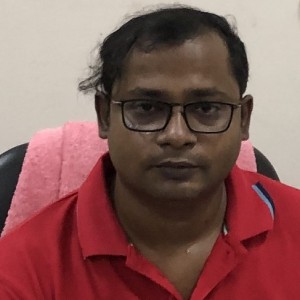
Dr. Mohammad Abdul Quader
Deputy Director
I work on the interaction of the human and nature targeting disaster risk reduction. I use both qualitative and quantitative techniques in my research with extensive advanced use of geospatial techniques. I received B. Sc. Honors and M.S. in “Geography and Environment” from Dhaka University in 2006 and 2008 respectively. Later I have completed my second M.S. in Physical Land Resource Engineering in Ghent University and VUB, Belgium in 2013. I have completed VLIR-UOS funded ICP PhD under the supervision of Professor Matthieu Kervyn, VUB, Belgium in 2022. I attended several international conferences including AGU. I have published more than fifteen scientific articles in international and national peer reviewed journals. I have supervised several bachelor’s and master’s thesis students. With field experience of more than a decade in the field of disaster risk reduction in the coastal area in Bangladesh, I am now interested in working on the combining of artificial intelligence with the big datasets and the socio-economic data in the impact, response and policies related to climate change driven natural hazards.
Profile View Resume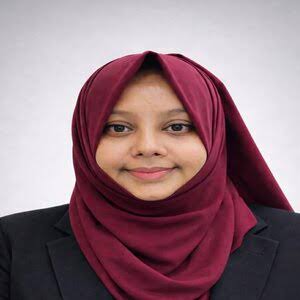
Dr. Riffat Mahmood
Deputy Director
Dr. Riffat Mahmood has 10 years of teaching experience and engaged in various national and international organizations doing research related to human-environment interaction, multi-hazard and risk modeling, migration, urbanization, loss and damage (L&D), and climate action (SDG 13). She did PhD in Cartography and Geographic Information Science (research focus: Coastand Climate Change) at the Aerospace Information Research Institute (AIR) of Chinese Academy of Sciences (CAS), China; Masters and a Bachelor's in Geography and Environment with special focus on Human Geography from University of Dhaka, Bangladesh. Based on the academic and research excellence, Dr. Mahmood was awarded “CAS-TWAS President’s Fellowship” by The World Academy of Sciences (TWAS), Italy, and UNESCO. She formulated novel Climate Change Resilience of Place (C-CROP) model based on the principles of climate change vulnerabilities and resilience with an approach to the incorporation of nature-based solution (NBS). To formulate the C-CROPmodel, she thoroughly reviewed the discourse and related narratives on disaster management, climate change-induced vulnerabilities, adaptation, and resilience. This theoretical review gave her deeper understanding of the need of vulnerable communities and barriers to the adaptation practices of local community especially in the Third World context. Using mixed-methods approaches (i.e. Earth observation (EO) technology, quantitative modeling, and qualitative analysis). Dr. Mahmood has worked on data linkage and surveys. However, her interest incorporates theoretical knowledge with various powerful tools and techniques (i.e. PAR, GIS, RS, MCE etc.) to support policy recommendations and advocacy. She has led multidisciplinary, multisite research teams that have community relevance, and policy and practice impact.
Profile View Resume